
Academic Oversight: Reviewed and verified by the Studivaro Academic Review Board in accordance with collegiate mathematical weighting protocols (AACRAO grade reporting standards and university academic senate assessment policies) governing syllabus weighting, quality point distributions, and remediation thresholds.
How much does a zero affect your grade? The impact of a zero depends entirely on your syllabus grading system. In a weighted category system, a zero on an assessment directly deducts its entire categorical percentage from your maximum possible final score; for example, a zero on a 20% midterm instantly caps your highest possible semester grade at 80% (B-), dropping a 95% A down to 75% C. In a total points system, a zero adds 0 points to your numerator while expanding your denominator by the full point value, requiring between 4 to 9 consecutive perfect scores (100%) just to restore your cumulative grade to a passing B average.
📱 Calculate Your Grade Recovery & Final Exam Target Instantly:
Model how much a zero dropped your standing and calculate the exact exam score required to rescue your semester GPA:
Waking up, opening your student portal (Canvas, Blackboard, or Brightspace), and discovering a bright red “0” entered for a major exam or assignment is one of the most stomach-churning experiences in college. Watching a hard-earned 92% average plummet overnight into the 70s or 60s triggers immediate panic. Students frantically search: how much does a zero affect your grade, and can a single missing assignment truly destroy months of academic diligence?
The brutal reality is rooted in mathematical asymmetry. While an “A” grade spans just 10 percentage points (90% to 100%), a failing grade spans a massive 60 percentage points (0% to 59%). When evaluating how much does a zero affect your grade, that zero acts like a mathematical lead weight, dragging down your running average far more aggressively than any low passing score ever could. Understanding the precise mathematical mechanics behind weighted categories, total point distributions, and recovery formulas empowers you to take decisive corrective action before final semester marks are cemented on your transcript.
1. The Mathematical Asymmetry: Why a Zero Is Devastating
To truly grasp how much does a zero affect your grade, you must understand why traditional 100-point grading scales are mathematically biased against students who miss even one assignment. Educational researchers and psychometricians have long documented the inherent distortion of the percentage grading system:
- Equal 10-Point Intervals for Passing: An A represents 90%–100% (10 points). A B represents 80%–89% (10 points). A C represents 70%–79% (10 points). A D represents 60%–69% (10 points).
- The 60-Point Abyss of Failure: An F is not a 10-point bracket (50%–59%). An F stretches from 0% all the way to 59%—a colossal 60-point range.
- The Disproportionate Mathematical Weight: A zero is six times further away from a passing grade (60%) than an A is from a B. When calculating an arithmetic mean, a zero exerts six times more downward gravitational pull on your grade than a 100% exerts upward pull.
For example, if you earn a 100% on Test 1 and a 0% on Test 2, your mathematical average is not an acceptable grade—it is a 50% (an outright F). You demonstrated absolute mastery on half the curriculum, yet the mathematical structure of the zero treats your overall performance as complete failure. This is why understanding how much does a zero affect your grade is the foundation of academic defense.
2. Weighted Categories vs Total Points: Exact Drop Formulas
Universities and colleges evaluate course marks using two primary grading frameworks. The answer to how much does a zero affect your grade differs substantially depending on which framework your professor employs in the official syllabus.
Framework A: The Weighted Category Model
In a weighted syllabus, assessments are divided into categorical percentages (e.g., Homework 15%, Quizzes 20%, Midterm Exam 25%, Final Exam 40%). The mathematical formula governing categorical grade drops is:
Categorical Grade Drop = (Assessment Weight / Category Total Weight) × Category Weight in Final Grade
Real-World Example: Suppose your course grade is structured with Midterm Exams worth 30% of your total grade (consisting of two midterms worth 15% each). If you earned a 94% on Midterm 1 but received a 0 on Midterm 2:
- Your Midterm Category average collapses from 94% down to: (94 + 0) / 2 = 47%.
- The direct penalty to your entire semester grade is: 15% × 1.00 = 15 whole percentage points deducted from your final grade.
- If you were holding a 92% (A), your course grade instantly plunges to a 77% (C+). The single zero makes earning an A mathematically impossible for the remainder of the term.
Framework B: The Total Points System
In a cumulative point system, every assignment contributes raw points toward a predetermined semester total (e.g., 1,000 total points available throughout the semester). Here, the formula calculating how much does a zero affect your grade operates on fraction denominators:
New Running Grade % = [ Earned Points / (Total Points Attempted + Missed Assignment Points) ] × 100
Real-World Example: Suppose you have accumulated 270 points out of 300 attempted so far (a solid 90% A-). You miss a 100-point lab report and receive a zero:
- Your earned points remain at 270. However, your attempted denominator expands to 400 points.
- New Grade Calculation: 270 / 400 = 67.5% (D+).
- The zero inflicted an immediate, devastating drop of 22.5 percentage points because the missed assignment represented 25% of your total evaluated work to date.
3. The Zero Recovery Matrix: How Many 100s Do You Need?
The question students ask immediately after discovering how much does a zero affect your grade is: “How many perfect scores do I need to fix this?” Because of the mathematical asymmetry of averages, climbing out of a zero deficit requires an immense volume of subsequent work.
The comprehensive matrix below models standard collegiate assessment weights and details the exact number of subsequent 100% scores required to restore your grade back to target letter benchmarks:
| Assignment Weight / Points | Starting Grade | Immediate Drop from Zero | New Grade After Zero | 100% Scores Needed for B (80%) | 100% Scores Needed for A (90%) |
|---|---|---|---|---|---|
| 5% (Weekly Quiz / Homework) | 92.0% (A) | −4.6% to −5.0% | 87.2% (B+) | 0 (Already > 80%) | 2 to 3 Perfect Quizzes |
| 10% (Major Lab / Essay) | 90.0% (A-) | −9.0% to −10.0% | 80.5% (B-) | 0 (Borderline Safe) | 5 to 7 Perfect Labs |
| 20% (Midterm Exam 1) | 88.0% (B+) | −17.6% to −20.0% | 69.2% (D+) | 3 Consecutive Exams @ 95%+ | Mathematically Unreachable |
| 30% (Comprehensive Project) | 85.0% (B) | −25.5% to −30.0% | 57.5% (F) | 6 Major Assessments @ 100% | Mathematically Unreachable |
| 40% (Final Examination) | 95.0% (A) | −38.0% to −40.0% | 57.0% (F) | Impossible (Course Terminated) | Impossible (Course Terminated) |
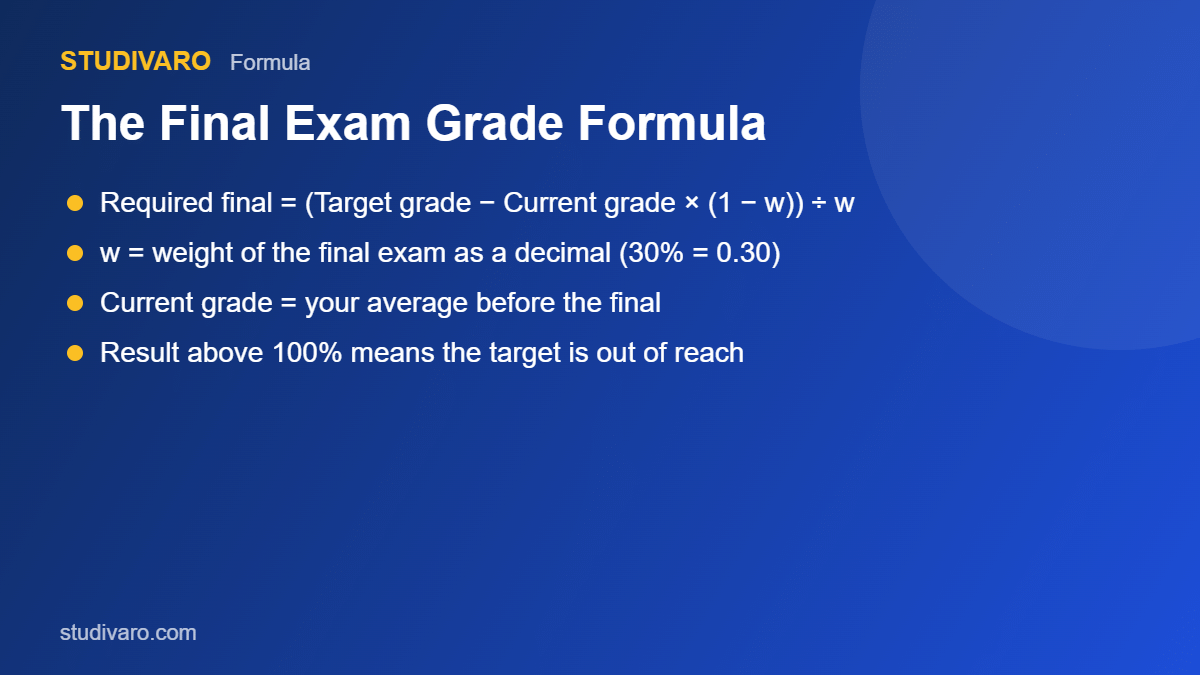
To calculate your customized mathematical recovery target without making manual arithmetic errors, plug your current grading weights into our free Final Exam Grade Calculator, which simulates your exact required test marks.
4. Five Damage-Control Tactics When You Receive a Zero
When students realize how much does a zero affect your grade, their first instinct is often paralysis or denial. However, collegiate academic policies offer several institutional mechanisms to neutralize the damage before final transcripts lock:
Tactic 1: The “Anything Is Better Than a Zero” Principle
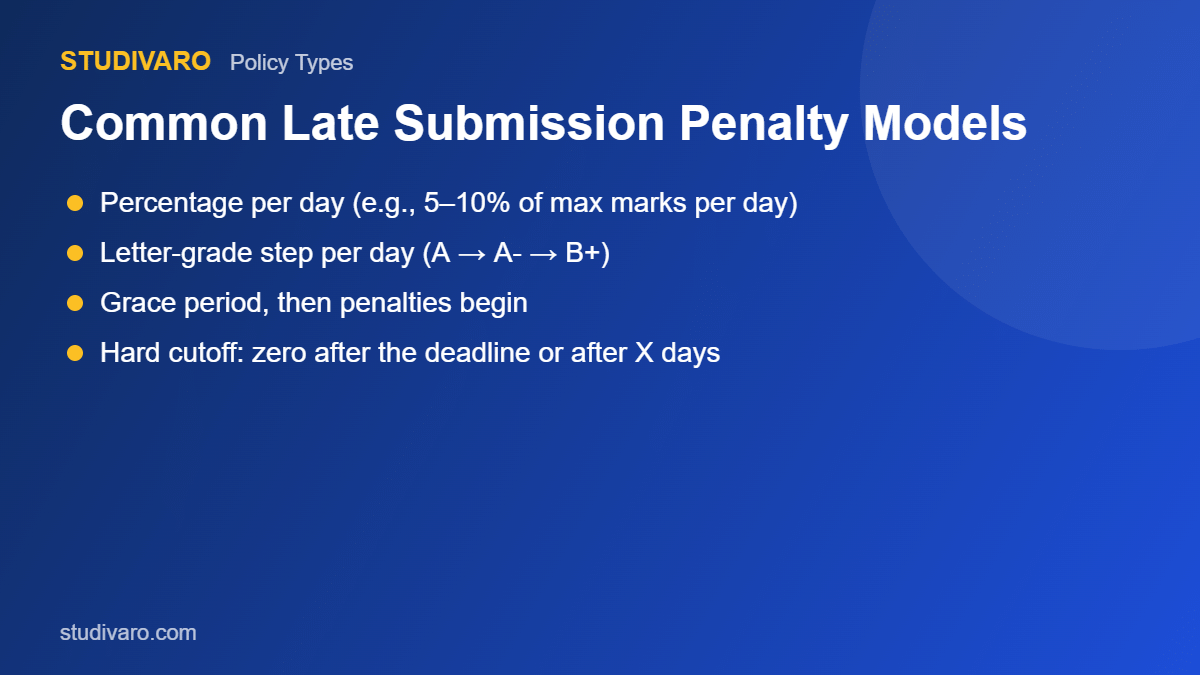
The single biggest mistake college students make is failing to submit an assignment because it is incomplete. Earning a 50% (F) on a rushed, half-finished essay is infinitely superior to receiving a 0%. A 50% cuts the downward mathematical pull on your GPA by more than half, keeping your grade in the recoverable B or C range. Review our guide on the academic late submission penalty calculator to see how daily percentage deductions operate across universities.
Tactic 2: Leverage Syllabus “Drop the Lowest” Provisions
Many introductory STEM and humanities professors include a standard syllabus grace clause: “The lowest quiz score or homework grade will be dropped at the end of the term.” If you miss an assignment, review the course syllabus immediately. If a drop policy exists, that zero will be automatically excised from your final grade calculation in December or May.
Tactic 3: Canvas “What-If” Stress-Testing
Inside Canvas LMS, students can click into their course Grades view and click directly on the score column to input hypothetical “What-If” scores. Test realistic future scores to determine whether an A is still statistically attainable or if you should recalibrate your study efforts to lock in a solid B+.
Tactic 4: Understand the D vs C- Passing Threshold
If a catastrophic zero plunges your course average into the 60s, you must determine whether your degree program accepts a D as passing. In general education electives, a D often awards graduation credit, but in major prerequisites, a C or higher is mandatory. Consult our detailed analysis on the minimum passing grade in college: D vs C- rules.
Tactic 5: Grade Forgiveness & Course Retakes
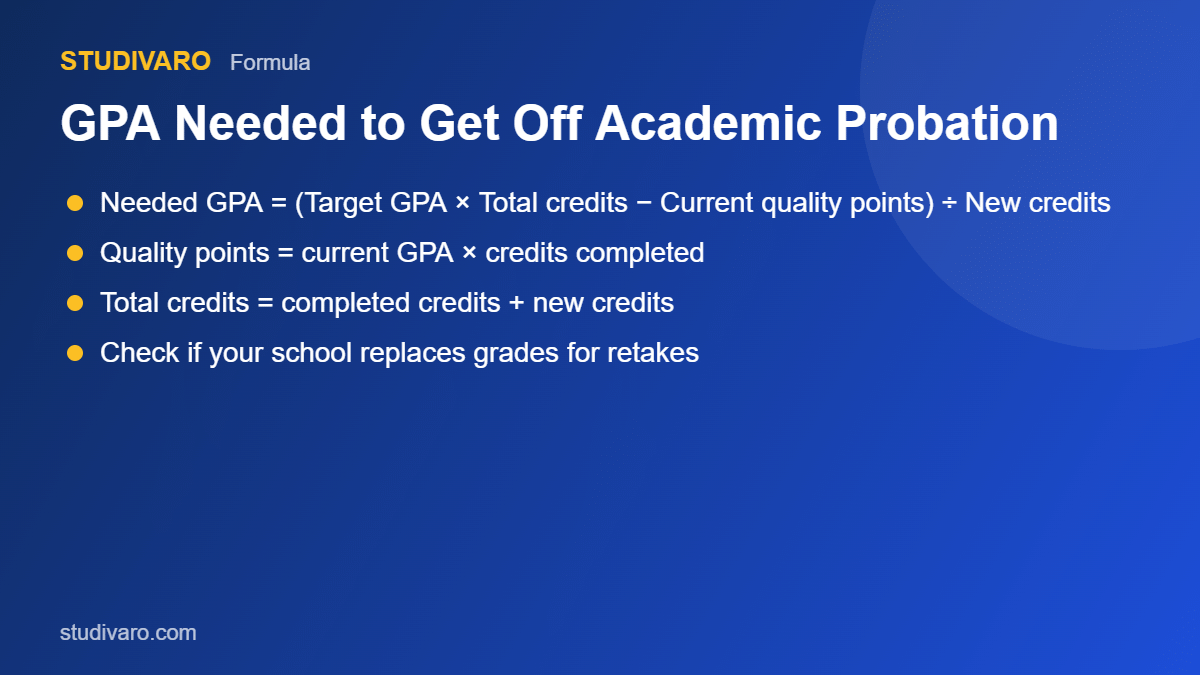
If a zero on a final exam or term paper causes course failure, remember that university registrars provide formal recovery policies. Grade replacement allows you to repeat the course in the upcoming term and overwrite the failing GPA mark. See our complete breakdown on grade forgiveness retakes GPA impact and what happens if you fail a class in college. Furthermore, if a zero resulted from an unexpected late-term crisis, explore securing an incomplete grade in college to pause term GPA calculations, or verify registrar bylaws on can a professor change your grade if an LMS grading discrepancy occurred.
5. Two Ready-to-Send Email Templates to Turn a Zero into Partial Credit
Communicating with your professor immediately after an assignment deadline passes is critical when mitigating how much does a zero affect your grade. Professors respect personal accountability and proactive communication. Use the two tested templates below:
Template 1: Proactive Late Submission Request for Partial Credit
Subject: Late Submission Inquiry – [Your Full Name] – [Course Code & Section] – [Assignment Title]

Dear Professor [Professor's Last Name],

I hope you are having a productive week.

I am writing regarding [Assignment Title], which was due yesterday at [Due Time]. Due to [brief, honest reason: e.g., an unexpected health migraine / acute scheduling conflict with my part-time job], I was unable to complete and upload the file before the portal closed.

I take full personal accountability for missing the deadline. I have completed the assignment in full and attached the PDF to this email.

I completely understand and respect your syllabus late-work guidelines, but I wanted to respectfully inquire if you would consider accepting my submission for partial credit (even with the standard late deduction applied). Earning partial credit would mean a great deal in preserving my standing in your course.

Thank you very much for your time, patience, and guidance.

Sincerely,
[Your Full Name]
Student ID: [Your Student ID Number]
Course: [e.g., PSYC 201, Section 04]
Attachment: [Assignment_Title_YourLastName.pdf]
Template 2: LMS / Canvas Technical Glitch Submission Appeal
Subject: Technical Submission Discrepancy – [Your Name] – [Course Name] – [Assignment Title]

Dear Professor [Professor's Last Name],

I hope your week is going well.

I am reaching out regarding the gradebook update for [Assignment Title] in Canvas, which currently shows a zero.

I attempted to submit my completed document yesterday prior to the deadline at [Time of Attempt], but encountered an unexpected file upload error on the portal [describe error briefly: e.g., spinning submission wheel / unrecognized file extension].

To demonstrate that the work was completed in good faith prior to the deadline, I have attached both the completed assignment file and a timestamped screenshot of my computer's document file properties confirming the last-modified timestamp of [Date and Exact Time].

Could you please review the attached document and let me know if it can be evaluated? I am more than happy to meet briefly during your office hours this week if needed.

Thank you for your time and understanding.

Best regards,
[Your Full Name]
Student ID: [Your Student ID Number]
Course: [Course Code, MWF 10:00 AM]
Attachments: [Completed_Assignment.pdf, File_Timestamp_Proof.png]
Frequently Asked Questions (FAQs)
Can you still get an A if you get a zero on an assignment?
Yes, but only if the assignment carries low categorical weight. If you receive a zero on a weekly homework assignment or pop quiz worth 2% to 5% of your grade, earning 95%+ on all remaining exams and projects will keep your final average comfortably in the 90% A- range. However, if the zero is on a major exam worth 15% or more, an A becomes mathematically impossible without extra credit or a syllabus drop policy.
How much does a zero on a test drop your grade?
A zero on an exam typically drops your overall course grade by 15 to 25 percentage points. In a course where tests account for 40% of the grade across two exams (20% each), missing one test instantly deducts 20 percentage points from your semester grade, transforming an 88% B+ into a 68% D+.
Why do professors give zeros instead of 50s?
Under traditional percentage grading, a zero represents non-submission or zero demonstration of curricular mastery. While educational reform advocates argue that minimum grading (giving a floor of 50% for missing work) prevents mathematical devastation, most university academic charters mandate recording actual raw performance (0/100) to maintain accreditation standards.
How many 100s does it take to recover from a zero?
In an equally weighted point system, it takes four consecutive 100% scores to lift a zero up to an 80% (B), and nine consecutive 100% scores to lift it to a 90% (A). The formula is: Number of 100s = Target Grade / (100 − Target Grade).
Does a zero in one college class affect financial aid?
Indirectly, yes. If a zero causes you to fail a course, it drags down your semester and cumulative GPA and reduces your Satisfactory Academic Progress (SAP) completion pace below the federal 67% threshold, which can trigger financial aid probation under Title IV regulations.
How does Canvas handle missing assignments vs zeros?
By default, Canvas LMS does not calculate missing assignments into your running total until the instructor explicitly enters a “0” into the gradebook. This often creates a misleading sense of security, displaying an artificial “A” until final exam week when unsubmitted work is zeroed out and your grade suddenly drops.
Final Exam Risk Analysis: If an unexpected crisis causes an absence on exam day, consult our institutional guide on what happens if you miss a final exam in college to understand how faculty process zeroes versus deferred examination contracts.
Simulate the Exact Impact of a Zero on Your Grade
Calculate how a missed quiz or zero on an assignment shifts your cumulative course grade, and compute the exact score required on your final exam to recover.