
Academic Oversight: Reviewed and verified by the Studivaro Academic Review Board in accordance with American Association of Collegiate Registrars and Admissions Officers (AACRAO) course repeat standards, federal Title IV Satisfactory Academic Progress (SAP) rules, and AMCAS/LSAC graduate transcript recalculation frameworks.
How Does Grade Forgiveness Impact GPA? Under institutional Full Grade Replacement, the quality points of your previous failing grade are subtracted and replaced entirely by the new grade, keeping total completed credit hours constant: New GPA = (Initial Quality Points − Old Points + New Points) ÷ Total Credits. Under Grade Averaging, both attempts count toward GPA: New GPA = (Initial Points + New Points) ÷ (Initial Credits + Retake Credits).
Navigating grade forgiveness and course retakes is one of the most powerful academic strategies college students can leverage to recover from a failing grade, lift their cumulative GPA above academic probation thresholds, and protect their merit scholarship standing. However, university repeat policies vary significantly between institutions: while some colleges grant complete grade replacement where an F is entirely stripped from your GPA calculation, others apply grade averaging, blending both attempts and severely muting your upward GPA momentum.
📊 Forecast Your New Cumulative GPA with Course Retakes:
Calculate the exact mathematical impact of replacing a D or F grade with an A or B across your total semester credit hours:
Open College GPA Calculator →Before investing thousands of dollars in tuition and months of rigorous study repeating a class, students must understand the precise mathematical mechanics of grade recalculation, the rules governing official transcript notation, and the critical exceptions enforced by graduate (AMCAS, LSAC) admissions committees. This guide breaks down the three dominant collegiate repeat frameworks, provides step-by-step mathematical case studies, and outlines the five strategic rules to master before enrolling in a course retake.

1. The Three Primary University Course Repeat Frameworks
When you enroll in a course for the second time, your university registrar processes the new letter grade under one of three distinct administrative policies. Determining which policy appears in your university’s academic bulletin is essential for accurate GPA forecasting:
| Repeat Policy Model | GPA Calculation Impact | Transcript Representation | Typical Institutional Rules |
|---|---|---|---|
| Full Grade Replacement | Only the highest (or latest) grade counts toward cumulative GPA. Earlier grade quality points are zeroed out. | Both attempts appear. Initial attempt marked with ‘E’ (Excluded); new attempt marked ‘I’ (Included). | Usually capped at 12 to 16 credits (approx. 3–4 classes). Often restricted to C−, D, or F initial grades. |
| Grade Averaging | Both attempts factor into cumulative GPA. Total attempted credits double for that course. | Both letter grades remain fully active without exclusion flags. Credit hours earned counted only once. | Standard policy at competitive private institutions and flagship universities without forgiveness codes. |
| Freshman Forgiveness | Full grade replacement applied exclusively to courses taken during your first 24 to 30 collegiate credits. | Original course marked as forgiven. Replaced grade recalculates baseline cumulative average. | Applies strictly during freshman year to assist high-school-to-college transition setbacks. |
If your initial poor grade caused your academic average to dip below a 2.0, review our operational guide on academic probation GPA recovery to ensure your retake schedule meets institutional retention standards.
2. Step-by-Step Mathematical Case Study: Grade Forgiveness vs Averaging
To illustrate how grade forgiveness radically alters your transcript compared to grade averaging, let us examine a realistic student case study with concrete numbers.
Student Profile Baseline:
- Total Credits Completed: 30 semester credit hours (Freshman Year)
- Total Quality Points Earned: 75.0 quality points
- Current Cumulative GPA: 2.500 (75.0 / 30.0)
- Target Course: General Chemistry I (4.0 Credit Hours) – Initial Grade: F (0.0 points)
- Retake Outcome: Student repeats General Chemistry I and earns an A (4.0 points)
Outcome A: Under Full Grade Forgiveness (Replacement)
Under grade forgiveness, the initial 4.0 credits of F (0.0 quality points) are removed from the GPA calculation. The new 4.0 credits of A generate 16.0 quality points (4.0 credits × 4.0 quality points):
- Revised Total Quality Points: 75.0 − 0.0 + 16.0 = 91.0 quality points
- Revised Total GPA Credits: 30.0 − 4.0 + 4.0 = 30.0 credit hours
- New Cumulative GPA: 91.0 / 30.0 = 3.033 GPA
- Net Academic Gain: +0.533 GPA Points (Leaping from academic caution straight into honors eligibility)
Outcome B: Under Standard Grade Averaging
Under grade averaging, the student does not discard the original attempt. Both the original 4-credit F and the new 4-credit A count toward attempted GPA credits:
- Revised Total Quality Points: 75.0 + 16.0 = 91.0 quality points
- Revised Total GPA Credits: 30.0 + 4.0 = 34.0 credit hours
- New Cumulative GPA: 91.0 / 34.0 = 2.676 GPA
- Net Academic Gain: +0.176 GPA Points (Substantially lower upward gain due to denominator expansion)
For step-by-step credit formulas and term weighting principles, explore our comprehensive breakdown on how to calculate semester GPA with credit hours.
3. The Professional School Trap: AMCAS, LSAC & Graduate School Recalculations
The single greatest misconception undergraduate students possess is assuming that institutional grade forgiveness protects them during postgraduate admissions. While your home university might display a clean 3.65 GPA on your commencement diploma, national professional school application clearinghouses enforce strict standardized audit guidelines:
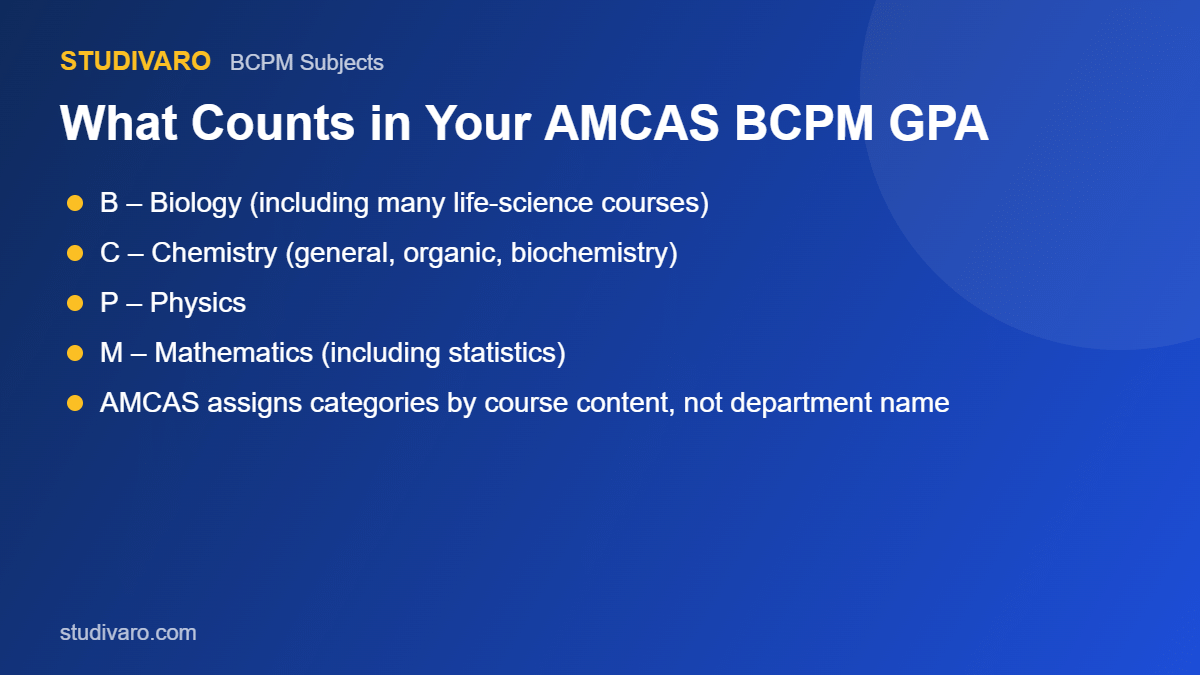
Medical School Admissions (AMCAS & AACOMAS):
The American Medical College Application Service (AMCAS) completely disregards institutional grade forgiveness. AMCAS requires applicants to submit official transcripts from every college attended and standardizes all attempted coursework into its proprietary BCPM (Biology, Chemistry, Physics, Math) GPA. Every single F, D, or repeat attempt is factored into your AMCAS GPA with equal weighting. AACOMAS (Osteopathic Medicine) historically permitted grade replacement, but abolished the policy in May 2017 to align with AMCAS.
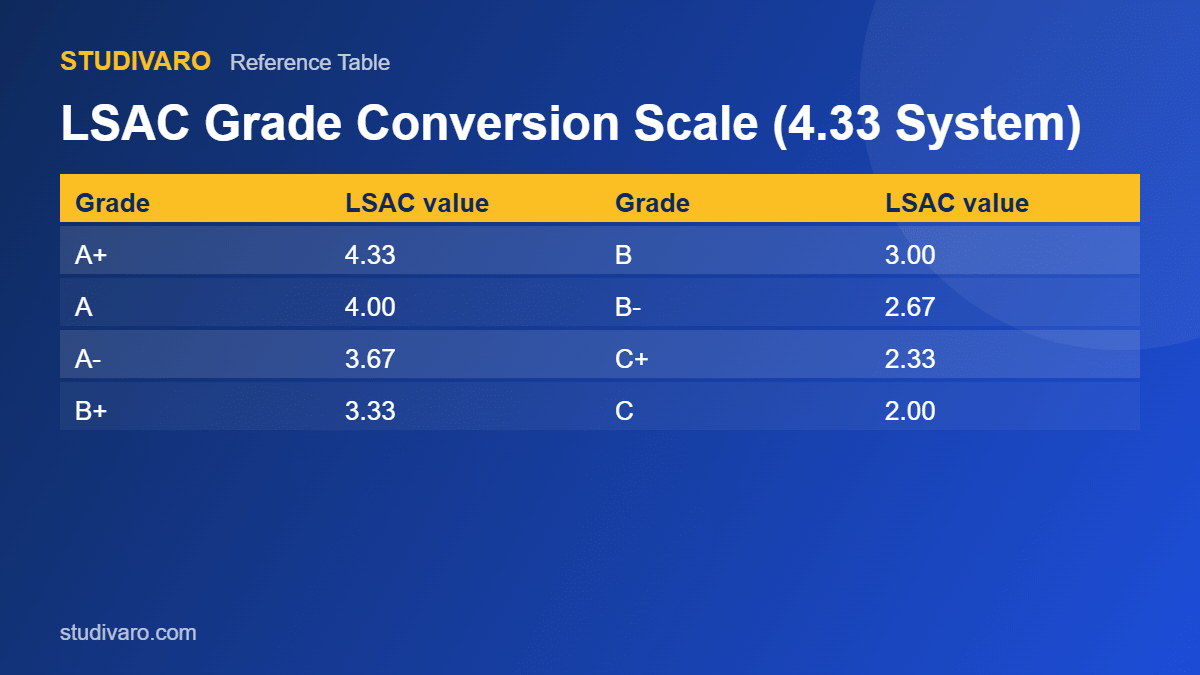
Law School Admissions (LSAC):
The Law School Admission Council (LSAC) performs an exhaustive transcript analysis. Under LSAC regulations, any course attempt that results in a punitive grade (including administrative failures, unexcused course drops, and forgiven F grades) is assigned an exact 0.0 value and factored into your cumulative LSAC GPA. Unless the original institution designates the forgiven course as an official retroactive non-punitive withdrawal (W), LSAC will average both grades.
Graduate School (MS, MA, PhD) Programs:
Traditional graduate programs generally honor institutional transcripts, but admissions committees pay special scrutiny to your upper-division major courses. When reviewing candidate transcripts, admissions faculty focus heavily on your trajectory and your cumulative GPA vs major GPA distribution to ensure foundational competency in core research coursework.
4. Five Crucial Rules Before Registering for a Course Retake
Before committing registration fees to repeat a course, ensure you comply with these five non-negotiable collegiate parameters:
- Verify the Repeat Attempt Ceiling: Most academic departments restrict students to a maximum of two attempts per course (initial attempt plus one retake). Registering for a third attempt almost always requires a formal Dean’s Academic Petition and department chair authorization.
- Audit the Lifetime Credit Forgiveness Cap: Colleges typically limit grade forgiveness to 12–16 semester units. Prioritize repeating 4-credit core STEM or major requirements with F or D grades rather than 1-credit physical education or general elective courses.
- Review Financial Aid & Repeated Course Rules: Federal Title IV regulations allow financial aid to cover repeating a previously passed course (grade of D or higher) only once. If you earned a D in Organic Chemistry and retake it for a C but fail, federal aid will not pay for a third attempt.
- Check Tuition Surcharge Penalties: Several state university systems (such as Texas and Florida) impose a punitive “Repeated Course Fee” (often an extra $100 to $150 per credit hour) when an undergraduate enrolls in the same course for a third time.
- Ensure Grade Eligibility Restrictions: Many institutions permit grade forgiveness only if the original grade was a C−, D, or F. If you earned a B− and desire an A, your department will likely prohibit grade replacement, applying grade averaging instead.
5. How to File for Grade Forgiveness: The 4-Step Process
Grade forgiveness is rarely automatic. At over 70% of universities, students must actively initiate the administrative petition process:
- Step 1: Check Registrar Deadlines: Confirm the grade forgiveness filing window on your university registrar portal. Some schools require filing before the semester drop/add deadline; others require submission after final grades post.
- Step 2: Obtain Departmental Approval: Schedule an appointment with your academic advisor. Have your advisor verify that the repeated course matches the original course catalog code and credit weighting identically.
- Step 3: Complete the Repeat Course Petition Form: Log into your student portal (e.g., Banner, Workday, Canvas SIS) and submit the formal Undergraduate Course Repeat / Grade Forgiveness Request Form.
- Step 4: Audit Your Official Degree Audit Report: After final grades post for the term, generate an updated Degree Works or official transcript report to verify that the previous grade is flagged with the correct exclusion code (‘E’) and your cumulative GPA reflects the full upward adjustment.
If you are weighing whether to withdraw before finals rather than risking an F and relying on grade forgiveness, read our critical strategic breakdown on what happens if you fail a class in college to protect your financial aid eligibility.
Frequently Asked Questions (FAQ)
What is the difference between Grade Forgiveness and Course Retake?
A course retake refers simply to enrolling in and completing a previously attempted college class a second time. Grade forgiveness is an institutional academic policy that legally removes the initial low grade (e.g., D, F, or NC) from your cumulative GPA calculation, substituting the higher grade in your official GPA denominator.
Does Grade Forgiveness completely erase an F from your official transcript?
No. Grade forgiveness never physically deletes a course attempt from your permanent academic transcript. The original course entry and F grade remain visible, marked with an administrative indicator code such as ‘E’ (Excluded from GPA) or ‘R’ (Repeat), while the second attempt receives an ‘I’ (Included in GPA) notation.
Do medical schools (AMCAS) and law schools (LSAC) honor undergraduate grade forgiveness?
No. Professional school application services, including AMCAS for medical school and LSAC for law school, enforce standardized recalculation rules that intentionally override university forgiveness policies. Both services factor every attempted college course and punitive grade into their proprietary GPA calculations.
How many courses can a college student repeat under grade forgiveness?
Most universities enforce a lifetime cap of 12 to 16 semester credit hours (equivalent to 3 to 4 standard undergraduate classes) for grade forgiveness eligibility. Once this credit threshold is exhausted, any subsequent course repetitions are subject to standard grade averaging.
Does repeating a course affect federal financial aid (FAFSA / SAP)?
Yes. Federal Title IV regulations permit financial aid disbursement for repeating a previously passed course only once. Furthermore, every repeated course counts toward your Satisfactory Academic Progress (SAP) Maximum Timeframe limit (150% of published program credit hours) and Pace of Completion.
How do I calculate what my new cumulative GPA will be after repeating a class?
Subtract the initial grade quality points from your cumulative quality point total, add the new grade quality points, and divide by total completed GPA credits (or use the expanded credit denominator if your university averages repeats). Use the Studivaro College GPA Calculator to model both scenarios instantly.